Lower Back Pain: What Helps, and When to Worry
A doctor explains what causes most lower back pain, the red flags that need urgent care, why most scans are unnecessary, and what genuinely speeds recovery.


The short version
- Most lower back pain comes from muscles, ligaments, joints and discs reacting to load, not from serious damage, and the large majority settles within six weeks.
- Staying active recovers people faster than bed rest, and this is one of the best-proven findings in all of musculoskeletal medicine.
- Most people do not need an X-ray or MRI, because scan findings like disc bulges are common in people with no pain at all and rarely change treatment.
- A small set of red flags matters: new bladder or bowel problems, numbness in the saddle area, fever, unexplained weight loss, or pain after a real fall or accident.
See a doctor promptly if
These are the signs that change this from something to read about into something to act on.
- New difficulty passing urine, loss of bladder or bowel control, or numbness around the genitals or between the legs: go to emergency now
- Back pain with fever, chills, or recent serious infection or injection drug use
- Back pain after a significant fall or accident, or any fall in someone with osteoporosis or long-term steroid use
- Back pain with unexplained weight loss, a history of cancer, or pain that is constant and worse at night
- New weakness in a leg or foot, such as a foot that slaps or drags
Lower back pain is one of the most common reasons adults see a doctor, and one of the most misunderstood. Most episodes are painful out of all proportion to the harm being done, most settle without scans or specialists, and the things that speed recovery are almost the opposite of what instinct suggests. The job is to know the small list of warning signs, and then to recover confidently rather than fearfully.
What is actually happening in your back#
The lower back is a stack of five sturdy vertebrae separated by discs, linked by small facet joints at the back, wrapped in ligaments, and moved by layers of muscle from the deep stabilizers up to the big movers you can feel with your hand. Nerve roots exit between the vertebrae on their way to the legs.
Almost any of these structures can hurt. A muscle can strain, a ligament can be overstretched, a facet joint can become irritated, a disc can be loaded beyond what it is currently conditioned for. The result is remarkably similar from the outside: pain, spasm, and a back that guards itself against movement. This is why doctors talk about nonspecific low back pain. It is not a brush-off. It means the pain is real, the structure at fault usually cannot be pinpointed, and, crucially, it does not need to be pinpointed to be treated well, because the treatment is broadly the same.
Two other points about mechanism matter. First, the spasm and stiffness you feel are protective reflexes, not signs of structural collapse. The back clamps down the way an eye waters: automatically and temporarily. Second, pain intensity is a poor guide to damage in the back. A trivial movement, picking up a sock, sneezing, can trigger severe pain in a back that was already sensitized, while significant disc problems sometimes cause only modest ache.
The causes, ranked by how common they really are#
Nonspecific mechanical pain accounts for roughly 90 percent of episodes. Muscles, ligaments, joints and discs reacting to load, posture, fatigue or deconditioning, usually in some combination.
Sciatica from a nerve root irritation, most often a disc prolapse pressing on or inflaming a nerve root, accounts for perhaps 5 to 10 percent. The signature is leg pain, often worse than the back pain, running below the knee, sometimes with tingling, numbness or weakness in one foot.
Vertebral compression fractures become important with age. In someone with osteoporosis, a fracture can follow a minor fall, a cough, or nothing memorable at all. Sudden severe pain in an older person, especially a woman past menopause or anyone on long-term steroid tablets, should raise this possibility.
Inflammatory back pain is uncommon but worth knowing. Pain that starts before age 40, comes on slowly, is worse with rest, wakes you in the second half of the night, and eases with movement and exercise can point to axial spondyloarthritis, which is regularly diagnosed years late.
Serious causes are rare. Spinal infection, cancer in the spine, and cauda equina syndrome together make up well under 1 percent of back pain seen in primary care. Rare is not never, which is exactly why the red flag list exists.
The red flags: learn these, then stop worrying#
Cauda equina syndrome happens when the bundle of nerve roots at the bottom of the spinal canal is compressed, usually by a large central disc prolapse. The warning signs are new trouble starting or stopping urine, incontinence, numbness in the saddle area, sexual numbness, or weakness in both legs. It is rare and it is a surgical emergency. Hours matter.
Fracture is suggested by significant trauma at any age, minor trauma in someone over 65 or with osteoporosis, or long-term oral steroid use. Sudden, severe, well-localized pain in that setting deserves imaging.
Infection of the spine or discs is suggested by back pain with fever or chills, recent bloodstream infection, recent spinal procedure or injection, injection drug use, or a weakened immune system. The pain is typically constant and progressive.
Cancer in the spine is suggested by a personal history of cancer, unexplained weight loss, age over 50 with new and unrelenting pain, or pain that is constant, progressive, and worse lying down at night. Any one of these alone is weak evidence. In combination they demand assessment.
Everything on this list is a reason to be seen promptly. None of it describes the ordinary pattern of mechanical pain: pain that varies with position and movement, better some hours than others, gradually improving over days to weeks.
What genuinely helps: movement beats rest#
This is the most important paragraph on the page. For ordinary low back pain, staying as active as pain allows leads to faster recovery, less disability and less recurrence than bed rest. This has been shown repeatedly in randomized trials over three decades and is now the unanimous position of guidelines in the US, UK, Europe and Australia. Bed rest beyond a day or two weakens the supporting muscles, stiffens the spine, feeds fear, and delays return to normal life.
Staying active does not mean pushing through severe pain or going straight back to the gym. It means:
- Keep walking, in short frequent bouts if long ones hurt. Walking is genuinely therapeutic for backs.
- Change position often. Backs dislike any single posture held for an hour, including lying down.
- Modify tasks rather than abandoning them. Shorter sessions, lighter loads, more breaks.
- Return to work early if the work can be adjusted. People who stay connected to work recover better than people who wait to be pain-free.
For pain relief in the first days, heat has reasonable evidence and few downsides. Anti-inflammatory medicines such as ibuprofen or naproxen, used short term if safe for you, have better evidence in back pain than acetaminophen, which performed no better than placebo in a large trial for acute back pain. Check suitability with a doctor or pharmacist if you have kidney, stomach, heart or blood pressure problems.
Beyond the first weeks, the treatments with the strongest evidence are exercise programs of almost any consistent type, walking, strength work, yoga, Pilates, whatever you will actually keep doing, plus addressing sleep, stress and low mood, which reliably amplify pain. Manual therapy and massage can help some people short term as an add-on. Opioids, routine injections and early surgery are not part of good care for ordinary back pain.
The imaging myth: why most MRIs are unnecessary#
The demand a doctor hears most is for a scan. Here is why guidelines push back.
MRI findings that sound alarming are normal features of spines that do not hurt. In studies of pain-free adults, disc degeneration is present in about 37 percent of 20-year-olds and around 90 percent of 60-year-olds. Disc bulges appear in roughly a third of pain-free 20-year-olds and more than half of pain-free 40-somethings. These are wrinkles on the inside.
This creates two real harms. First, a scan frequently finds something incidental, the report uses words like degeneration and bulge, and the person now believes their spine is crumbling. That belief measurably worsens outcomes: people scanned early for ordinary back pain tend to do no better, and in some studies worse, with more follow-up procedures and slower return to work. Second, scan findings tempt everyone toward treating the picture instead of the person.
Imaging earns its place when red flags are present, when there is significant or progressive nerve deficit, when inflammatory back pain is suspected, or when pain has failed to improve after roughly six weeks of proper care and the result would change the plan, for example if surgery or injection is genuinely on the table.
| Situation | Imaging usually needed? | Why |
|---|---|---|
| Back pain under 6 weeks, no red flags | No | Findings rarely change treatment and often mislead |
| Sciatica improving over weeks | No | Most disc prolapses shrink and settle on their own |
| Any cauda equina warning sign | Yes, urgent MRI | Surgical emergency, hours matter |
| Suspected fracture, infection or cancer | Yes | Red flags change everything |
| Progressive leg weakness | Yes | Nerve compression may need intervention |
| Not improving after 6 or more weeks of good care | Often | Now the result may change the plan |
Lifting, work and the industrial reality#
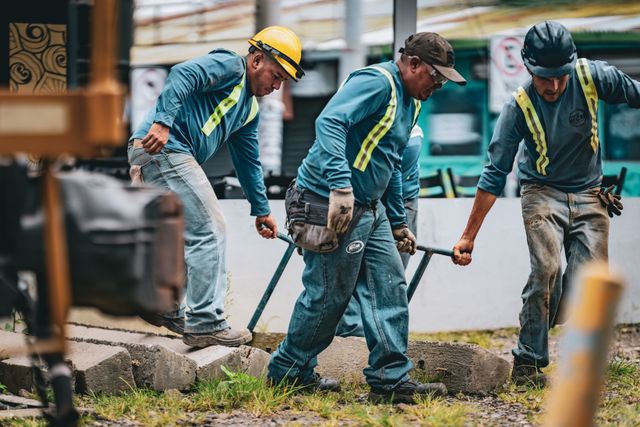
Back pain is the leading cause of lost workdays in most industrial settings, so this deserves more than a poster of a stick figure bending its knees.
The honest evidence on lifting technique is humbler than the training courses suggest. Studies have struggled to show that teaching a rigid straight-back, bent-knees style prevents injury on its own, and healthy backs bend and are built to. What actually predicts trouble is the load profile: weights beyond what the person is conditioned for, lifting while twisted, long shifts of repetitive lifting without rotation, lifting at the end of a fatigued shift, and sudden unexpected loads, the box that was heavier than it looked.
The principles that do hold up: keep the load close to your body, avoid twisting under load by moving your feet instead, use mechanical aids and a second person for genuinely heavy items, rotate tasks so the same tissues are not loaded all shift, and build capacity gradually when starting or returning to heavy work. A back conditioned by regular strength work tolerates far more than a deconditioned one, which is the strongest argument for exercise as prevention.
After an episode, early modified duties beat waiting at home for zero pain. The longer someone is off work with back pain, the lower the chance they ever return. That is one of the most sobering statistics in occupational medicine, and it is why good employers and doctors push for adjusted work, not extended absence.
What I actually see in clinic#
At the plant, the pattern I see most is not the dramatic lifting injury. It is a worker in their 40s or 50s with a back that has grumbled for years, a bad week of extra shifts or a new task, and then one ordinary movement that lit everything up. The scan question comes up in the first two minutes, and the fear underneath it is almost always the same: is my spine damaged, and will I end up unable to work?
What convinces people is rarely the statistics. It is examining them properly, showing them their leg strength and reflexes are normal, walking through the red flag list line by line so nothing is being brushed aside, and then giving them a plan with dates on it: modified duties this week, walking daily, review in two weeks. The people who do worst are not the ones with the worst pain on day one. They are the ones who go to bed for two weeks, brace themselves rigid, and come back convinced they must never bend again. Fear stiffens a back more effectively than any injury I have seen.
When to see a doctor even without red flags#
Not everything urgent, still worth a proper appointment: pain not improving at all by two to three weeks, pain still limiting you at six weeks, sciatica with any numbness or weakness, night pain that is constant rather than positional, a first episode after age 55, or back pain in anyone with osteoporosis, cancer history, or long-term steroid use. Also, back pain that keeps recurring several times a year deserves a prevention conversation, usually built around strength and conditioning, not another round of rest.
The bottom line#
Most lower back pain is a painful but safe condition that improves within weeks, and moving through it beats resting it. Learn the short red flag list, especially the cauda equina signs, and act fast if any appear. Skip the early scan unless a red flag or real nerve deficit demands it, because the pictures mislead more often than they help. Keep walking, keep working with adjustments, and treat recurrent episodes as a signal to build a stronger back rather than a more careful one.
Common questions
Should I rest in bed until my back pain settles?
Do I need an MRI or X-ray?
Is my disc bulge causing my pain?
What is sciatica, and is it dangerous?
What painkillers are reasonable for back pain?
How long should back pain take to get better?
Is lifting with a straight back the only safe way to lift?
Sources
Still not sure what this means for you?
Bring your reports to a call with one of our doctors. Leave with a written summary and the right questions for your own doctor.