What Is Metabolic Syndrome?
A doctor explains metabolic syndrome: the five criteria, why any three of them count, what it means for your risk, and what genuinely reverses it.


The short version
- Metabolic syndrome is a label for having any three of five findings: a large waist, raised triglycerides, low HDL cholesterol, raised blood pressure and raised fasting glucose.
- It is not a disease in itself but a risk cluster that roughly doubles cardiovascular risk and raises the chance of developing type 2 diabetes several-fold.
- It responds well to modest change. Losing five to ten percent of body weight, regular activity and better sleep can take people back below the threshold within months.
See a doctor promptly if
These are the signs that change this from something to read about into something to act on.
- Chest pain or pressure, breathlessness on exertion, or pain spreading to the jaw or arm: seek urgent assessment
- Very high thirst, frequent urination, blurred vision or unexplained weight loss, which suggest diabetes rather than prediabetes
- A blood pressure reading at or above 180/120 mmHg, or a fasting glucose above 126 mg/dL (7.0 mmol/L) on repeat testing
Metabolic syndrome is a name for a cluster, not a disease. You meet the definition if you have any three of five findings: a large waist measurement, raised triglycerides, low HDL cholesterol, raised blood pressure, and raised fasting blood glucose. Each on its own is a minor nuisance; three together mark a body that is handling energy poorly, and that combination roughly doubles cardiovascular risk and multiplies the chance of developing type 2 diabetes.
The reason the label exists is that these five travel together for a shared reason, insulin resistance, and treating them one at a time, by five different specialists, misses the point.
The five criteria#
| Criterion | Threshold |
|---|---|
| Waist circumference | 94 cm men / 80 cm women in most populations; lower thresholds (90 cm men / 80 cm women) for South and East Asian groups |
| Triglycerides | 150 mg/dL (1.7 mmol/L) or above |
| HDL cholesterol | Below 40 mg/dL (1.0 mmol/L) in men, below 50 mg/dL (1.3 mmol/L) in women |
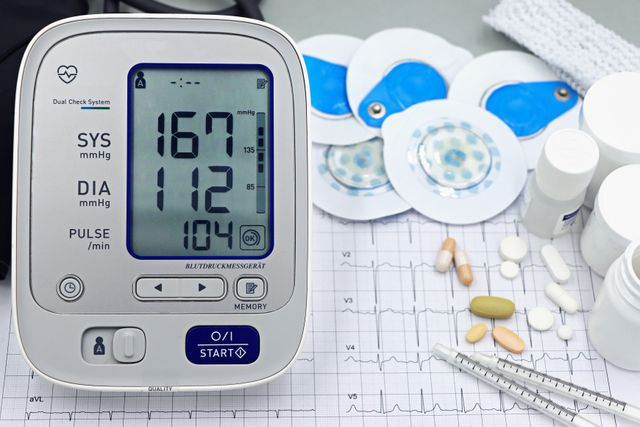
| Blood pressure | 130/85 mmHg or above |
| Fasting glucose | 100 mg/dL (5.6 mmol/L) or above |
Being on treatment for any of these counts as meeting that criterion. Definitions differ slightly between bodies, which is why one clinic may apply a waist cut-off of 102 cm for men and another 94 cm.
What is happening underneath#
Insulin's job is to move glucose out of the blood and into cells. When muscle and liver cells respond sluggishly, the pancreas compensates by producing more insulin. High circulating insulin then does several unhelpful things at once: it pushes the liver to make more triglycerides, encourages fat storage around the organs, promotes sodium retention which nudges blood pressure up, and lowers HDL.
Visceral fat, the fat packed around the liver, pancreas and intestines, is metabolically active, releasing inflammatory signals and free fatty acids into the portal circulation. That is why a waist measurement predicts trouble better than the number on the scales.
What genuinely helps#
Weight loss of five to ten percent is the single most effective intervention, and it need not go further to work. Landmark diabetes prevention programs achieved large risk reductions on exactly that scale.
Activity works partly independently of weight. Muscle takes up glucose without needing much insulin when it is contracting, so regular walking, cycling or any resistance work improves the picture even if the scales barely move. Aim for something most days rather than perfection twice a week.
On food, the highest-yield changes are cutting sugary drinks and alcohol, replacing refined starch with whole grains and legumes, and eating enough protein and vegetables to make that sustainable. No single named diet has beaten the others in head-to-head trials over the long term; adherence is what separates them.
Treat sleep apnoea if it is there. Snoring with daytime sleepiness in someone with a large neck and waist is worth investigating rather than tolerating.
Where this fits#
Metabolic syndrome is essentially insulin resistance wearing a formal name, and the practical work. Understanding the tests, the food changes that actually stick, and how prediabetes is monitored. Belongs in the fuller guide to prediabetes and insulin resistance.
Common questions
Can metabolic syndrome be reversed?
Which of the five matters most?
Can you have it at a normal weight?
Sources
Still not sure what this means for you?
Bring your reports to a call with one of our doctors. Leave with a written summary and the right questions for your own doctor.